
Personalized Health Programs

Recognizing the uniqueness of each individual, we empower you with science-backed insights, practical techniques, new technologies, and personalized approaches to achieve lasting wellness.
Our expert staff can guide you to create the optimal program for greater vitality and performance, to match your short-term and long-term goals, incorporating principles of preventive medicine and longevity.
Lifestyle & Nutrition
Healthy Lifestyle and Proper Nutrition:
Exercise: Regular physical activity stimulates tissue regeneration and keeps the stem cell niches in your muscles and other organs active.
Fasting: Research suggests that short-term fasting (e.g., 72 hours) can trigger the clearance of damaged cells and enhance stem cell regeneration.
Stress Control and Sleep: Managing chronic stress, maintaining adequate and regular sleep rhythm, avoiding smoking, excessive alcohol, and substance abuse, are all effective ways to reduce systemic inflammation and preserve a healthy environment for the stem cells to thrive.

Exercise, Physiotherapy, & Massage.
We align technical insight with disciplined execution to provide measurable gains across operational, financial, and strategic domains.
We align technical insight with disciplined execution to provide measurable gains across operational, financial, and strategic domains. Our integrated methodologies streamline multifaceted workflows, enabling organizations to deploy resources efficiently and capture emerging opportunities.
Personal Profile
From our interviews and questionaires, we help you to organize the information in a comprehensive personalized profile that will guide your different programs, taking into account your goals for improving your overall health and performance. s.
Your General Plan

We help you align your goals with your plan of action, informed by general scientific principles.
You can be well informed of the various options open to you, but all the programs and content provided by Globetek are for informational purposes only and do not constitute medical advice or prescriptions.
For any medical condition or treatment, you should always consult for your personal physician and health care provider who can closely monitor you.

What are stem cells?
Stem Cells are the natural building blocks of the body responsible for tissue formation, repair, and regeneration.
They are unspecialized cells capable of dividing and replicating repeatedly while remaining unspecialized.
Given the right biological signals, they can differentiate - transform into specialized mature cell types - such as muscle, bone, nerve, blood cells, and other cell types vital to the structure and function of tissues and organs.
Healthy Lifestyle and Proper Nutrition:
It is important to emphasize that everyday lifestyle habits are critical to support the body's natural regenerative systems. In fact, no stem cell therapy would be effective if poor lifestyle and nutrition damage the body’s stem cells on a daily basis.
Exercise: Regular physical activity to stimulate tissue regeneration by enhancing stem cells function.
Fasting: Can help clear damaged cells and allow new stem cells to repopulate tissues and organs.
Stress Control, Adequate Sleep, Avoid Harmful Habits: To maintain a healthy environment for the stem cells to thrive, you need to manage chronic stress, maintain adequate and regular sleep, and avoid smoking, excessive alcohol, and substance abuse.
Stem Cells & Aging?
Can stem cells help preserve vigor and vitality?
Let’s look at recent medical and scientific findings.
Stem cells are the body’s natural internal repair system, but their capacity to regenerate damaged tissues and organs decrease as we age. Thus, active research is being conducted to exploit the potential of using stem cells to alleviate age-related decline of our body functions.
How Stem Cells Relate to Aging
Stem cells are responsible for replenishing dying cells and repairing damaged tissues. As we age, several changes occur with our stem cell reserve.
Decreased Number and Function: With age, the number of stem cells in the body declines. Moreover, the ones that remain lose some of their ability to divide and produce other stem cells. The remaining stem cell also show decrease in their potency in various cellular functions.
Cellular Stress: As we age, the body accumulates damage from environmental factors, oxidative stress, and the amount of misfolded proteins that may cause stem cells to malfunction.
Stem Cells and Signs of Aging: Scientists suspect that the physical signs of aging, such as weaker muscles and bones, thinner skin, decrease in brain function and reduced function of various organs may be directly caused by the failure of stem cells to repair damaged cells in the body.
Maintaining Vigor and Vitality:
There are many different types of stem cells and their use must be tailored (personalized) for each patient. Rather than using stem cells to reverse overall aging, particular types of stem cells must be used to address specific degenerative conditions, especially since different organs within the same person may not show the same levels of degeneration as that persons ages.
Promising Areas for Stem Cell Applications:
Cellular Rejuvenation: Use of autologous or donor stem cells that have been selected for their optimal functions.
Mesenchymal Stem Cell (MSC) Therapies: May be used in combination with other stem cells to reduce damaging systemic inflammation and to support tissue repair in joints and organs.
Immune Cell Health: Maintaining the integrity of the immune system is crucial for repairing tissue damage.
Vascular Health: Studies indicate that keeping the vascular and lymphatic systems healthy seem to important for preserving stem cell youthfulness.
Types of Stem Cells
(Selected to be safe and effective for human use)
Mesenchymal Cells (MSC)
Endothelial Progenitor Cells (EPC)
Induced Neural Cells (INC)
Dendritic Cells (DC)
Cytokine Induced Killer Cells (CIK)
Umbilical Cord Blood Cells (UCB)
Umbilical Cord Wharton Cells (UCW)
(We do not use Embryonic, Aborted Fetal, or Induced Pluripotent Stem Cells altered by viruses or oncogenes.)
Highly skilled scientists, driven by curiosity, sparked by creativity, inspired to provide ethical and compassionate care.
Using advanced technologies, our scientists have extensive experience in growing and differentiating various human stem cells in the laboratory, keeping them alive and well-functioning, to be used safely and effectively in maintaining and enhancing organ function - at any age.
Mesenchymal Stem Cells (MSC)
Mesenchymal Stem Cells (MSC) are multipotent adult stem cells found mainly in the bone marrow, peripheral blood, adipose (fat) tissue, and umbilical cord.
MSCs can self-renew to produce more multipotent stem cells both in the body and in laboratory conditions. Under specific biological conditions, MSCs can develop into many cell types including bone cells, cartilage cells, fat cells, muscle cells, and neural cells.
MSCs also have the unique to modulate immune responses and suppress inflammation, making them highly valuable for treating immune disorders and autoimmune diseases.
In healthy bodies, MSCs are mainly found in connective tissues. When there is tissue injury or infection, MSCs migrate to the site of the damage. These MSCs then secrete bioloically active molecules such as growth factors and cytokines that decrease local cell death, reduce local inflammation, and stimulate natural repaid mechanisms of the body.
Due to the unique anti-inflammatory and regenerative property of MSCs, they have been used extensively in the treatment of:
Autoimmune diseases such as rheumatoid arthritis, multiple sclerosis, and Crohn’s disease.
Inflammatory disorders that lead to tissue damage or organ dysfunction, such as with respiratory distress syndrome and COVID-related inflammatory states.
Bone and connective tissue injuries to aid in repairing bone, cartilage, and tendon damage such as in knee injuries and osteoarthritis.
Neurological conditions, including neurodegenerative diseases, spinal cord, and peripheral nerve injuries.
Other clinical applications of MSCs are emerging with new laboratory and clinical investigations.
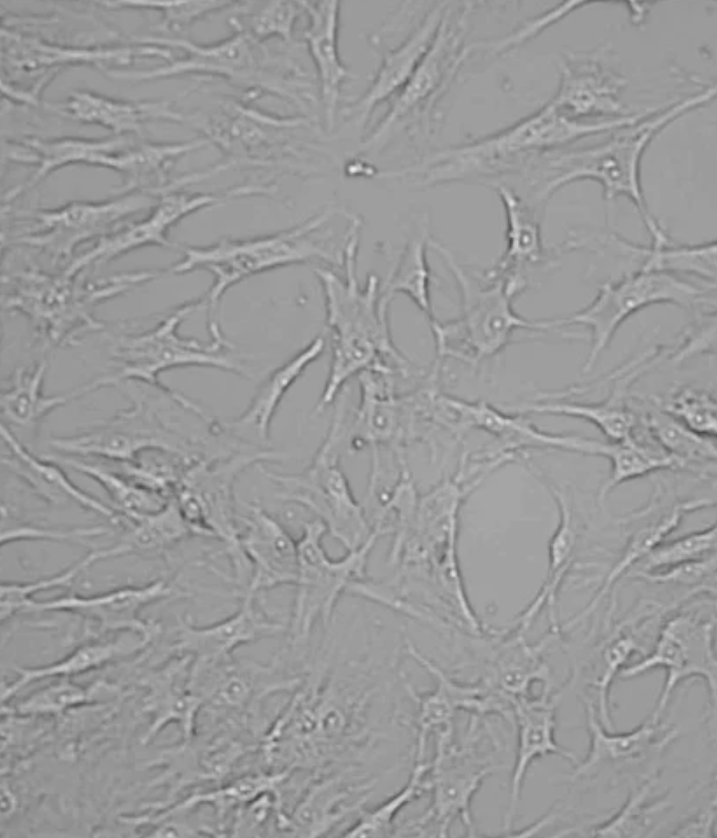
Human mesenchyal stem cells (MSCs) in live cell culture showing spindle-shaped cells growing attached to the culture dish or underlying substrate.
Endothelial Progenitor Cells (EPC)
The inside surface of a blood vessel, an artery, is lined by a thin, single layer of specialized cells called endothelial cells. These cells form a continuous interface between the circulating blood in the lumen and the muscular and connective tissue layers of arterial wall.
These lining cells play very important roles in the function of all organs of the body by regulating exchanges of nutrients and oxygen between the bloodstream and the surrounding tissues. The endothelial layer also regulates blood pressure, prevents unwanted blood clotting, and controls the passage of inflammatory white blood cells into the surrounding tissues.
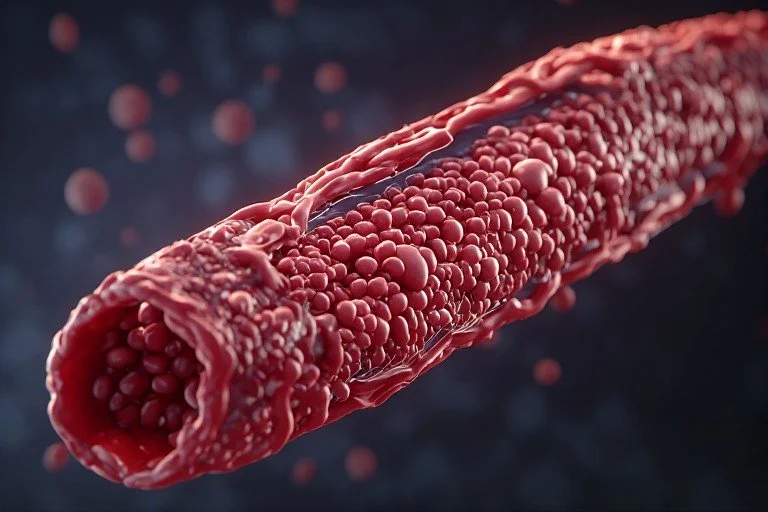
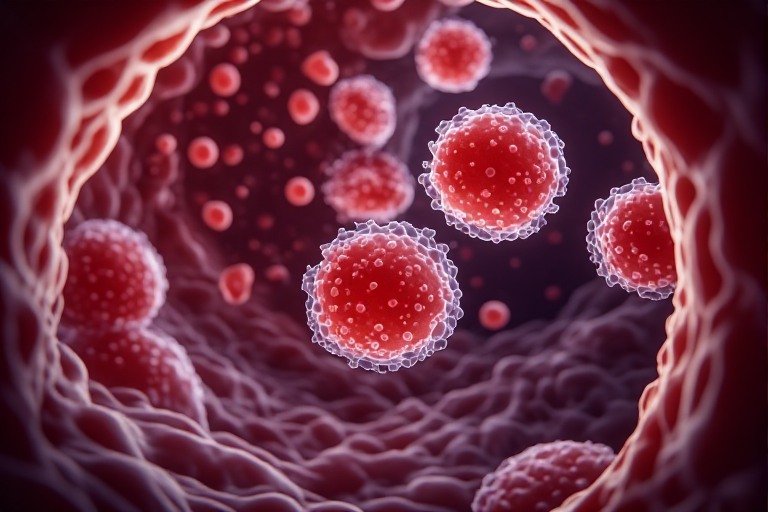
Schematic diagram of Endothelial Progenitor Cells migrating to the lumen of an artery to maintain and repair the inner lining of endothelial cells.
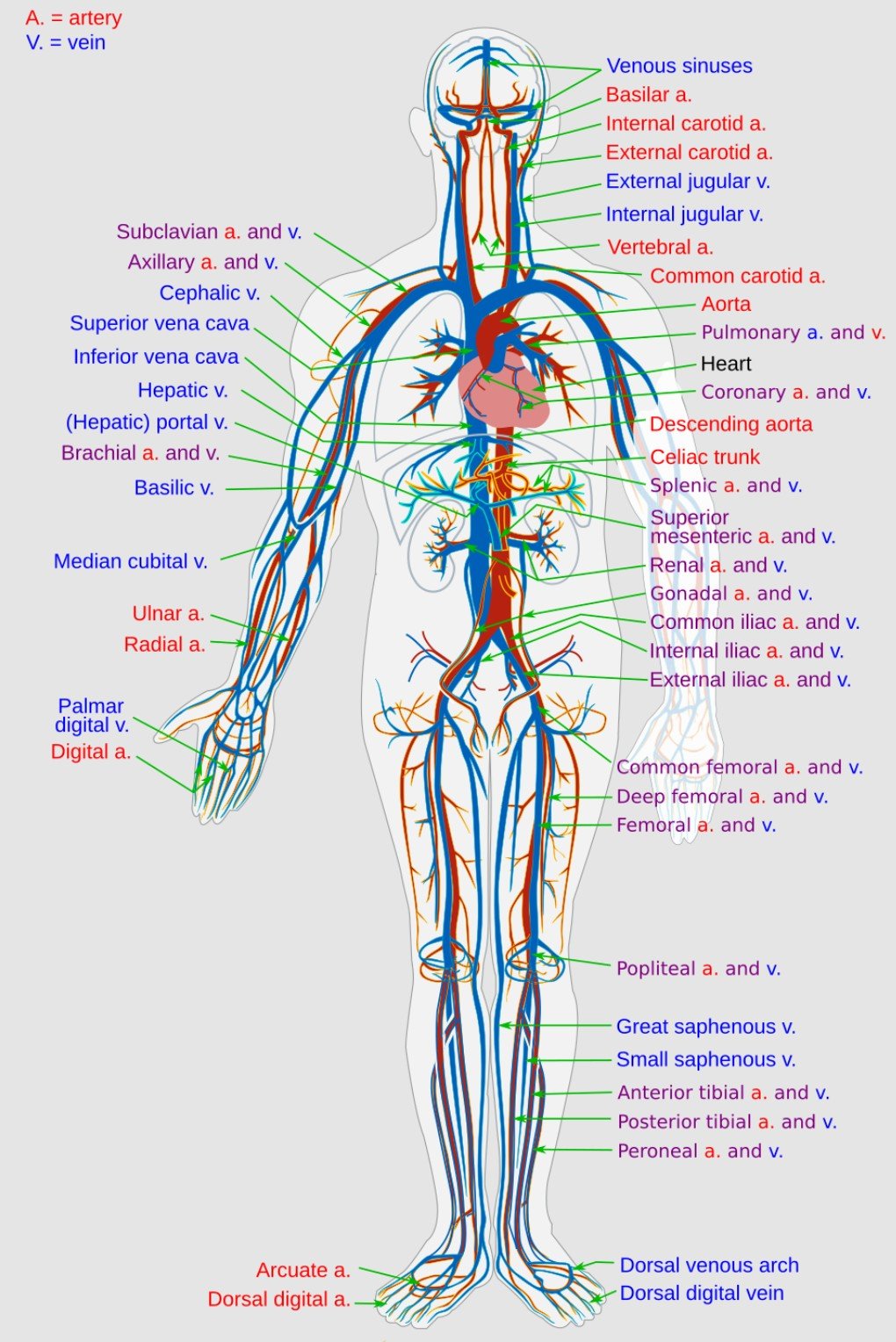
Circulatory System en.svg. Public domain. Wikipedia Commons
Schematic diagram of an artery with an inner lining of endothelial cells.
When the single cell layer of endothelial cells needs replenishing, is damaged, or weakened due to aging, particular stem cells - the Endothelial Progenitor Cells (EPC) - are mobilized and attach to the inner lining of blood vessel restoring its integrity.
When EPCs are low in numbers or are less functional, there could be serious interruptions in the critical functions of blood vessels and, in turn, all the organs that are supplied by all these blood vessels. Clinically, these deficiencies can appear as organ dysfunction and various degenerative diseases , including the signs of aging.
The laboratories of Globetek have extensive experience in identifying, isolating, cultivating, and increasing the numbers and functions of these specialized cells. These cells, derived from the patient’s own bone marrow, peripheral blood, from adult donor, or umbilical cord, can be infused into patients with minimal side effects, if any, and can restore the integrity of vascular function.
The human cardiovascular system is an extensive living network of blood vessels connected to the heart and the conduit for feeding all organs of the body.
Arteries are high-pressure vessels carrying oxygen-rich blood from the heart to the whole body.
Veins are return vessles that carry deoxgenated blood from the tissues back to the heart, aided by one-way valves that prevent backward flow.
Capillaries or micro-vasculature networks, however, are the crucial structures in delivering nutrients to the various organs. The micro-vasculature forms an extensive mesh throughout the body where actual exchange of oxygen, nutrients, and waste continuously happens between the blood and all the tissues of the body. It is in these capillaries that the integrity of the endothelium, maintained by endothelial progenitor cells (EPC), is most critical.
In recent studies, circulating blood EPCs were found to be reduced in patients with coronary artery disease, hypertension, diabetes, and peripheral arterial disease. Lower counts of circulating EPCs appear to be a more reliable indicator of vascular dysfunction and future cardiac events than the presence of traditional cardiovascular risk factors alone. Low levels of circulating EPCs are associated with impaired repair mechanisms in various organs of the body.
It is not surprising, then, that EPCs have emerged as important cells for maintaining organ function and regeneration.
Vascular Regeneration: Infused EPCs migrate to sites of endothelial injury, integrate into damaged blood vessel walls, and differentiate into mature endothelial cells.
Paracrine Effects: Aside from physically replacing dead cells, EPCs also secrete growth factors that reduce cell death, minimize tissue scarring, and encourage the survival of tissues and organs.
Revascularization: Infused EPCs aid in restoring the blood supply to ischemic (oxygen-deprived) tissues, which is particularly vital for treating critical limb ischemia and recovering from myocardial infarctions (heart attacks).
Applications of EPCs include:
Dendritic Cells (DC)
Dendritic Cells (DCs) are special immune cells that are naturally found in many tissues of the body, such as the skin. These cells amplify immune responses by showing antigens (such as molecules associated with tumors or invading organisms such as bacteria and viruses) on its surface to other cells of the immune system. DCs are a type of phagocyte (invader-engulging cell) and a type of antigen-presenting cell (APC).
Put simply, DCs act as “ policemen” in your immune system, whose main job is to patrol the body, looking for dangerous invaders such as cancer cells, bacteria, and viruses. Once DCs detect a threat, they engulf or “phagocytize" it, extract a signature piece (an antigen) that identifies the invader, and then quickly present the antigen to other immune cells. Thus, DCs also act as “messengers’ to other immune cells, so these immune cells know exactly what they need to attack, to protect the body from harm.
The term “dendritic” is derived from the Greek word “dendron” (meaning tree) because DCs grow with branched, tree-like tentacles that increase their surface area, allowing them to catch and trap many threats in their branches.
DCs can be collected from the peripheral blood and cultured in the laboratory, then processed in a series of technologically advanced steps for eventual use in cancer treatment. The blood is processed to culture immune cells called monocytes, then through the addtion of a series of stimulatory proteins, the monocytes are converted to immature DCs. Simultaneously, antigens are extracted from the patient’s own tumor to load them into the DCs and with the addition of a complex array of stimulatory factors, the DC are converted into “Activated DCs” that have been sensitized to specific cancer antigens.
When injected into the patient, these DCs transmit the signal to rest of the immune system to attack the cancer, but spare the normal cells and tissues. This type of action offers major advantages over chemotherapy, by being more specific to the cancer and less toxic to normal cells.
DCs are often combined with another specialized type of immune cell called Cytokine-Induced Killer (CIK) Cells to synergistically increase the tumor-killing activity of the immune system.
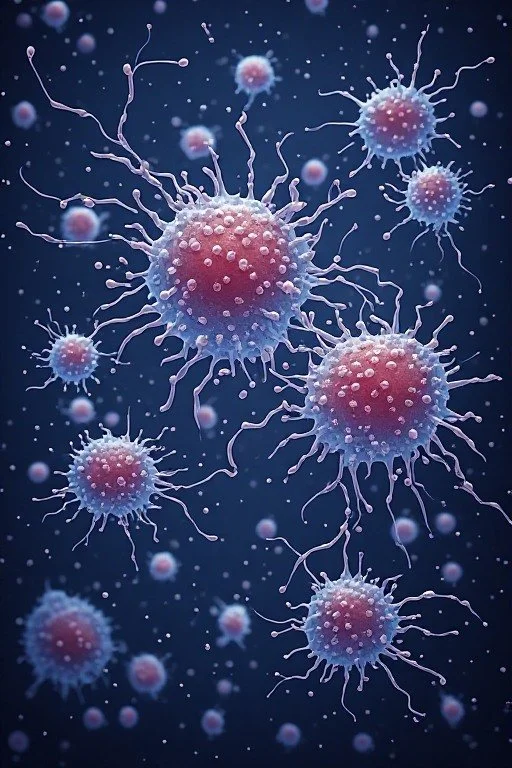
Illustration of Dendritic Cells with branched, tree-like tentacles to capture invaders such as cancer and infectious organisms, and present foreign antigens to the rest of the immune system.
Cytokine-Induced Killer (CIK) Cells
Cytokine-Induced Killer (CIK) cells are immune cells that have been engineered and expanded in the laboratory to enhance their ability to target and kill cancer cells. They are a combined population of T cells and natural killer (NK) cells that possess potent anti-tumor activity.
CIK cells are generated by culturing peripheral blood mononuclear cells (PBMCs) from a patient or donor with various natural immune proteins called cytokines. Cytokines are small proteins that act as chemical messengers in your immune system. When your body encounters a threat like a virus or bacteria, immune cells release cytokines to communicate with each other, coordinate a defense, and trigger inflammation.
This process of using cytokines to produce “Cytokine-Induced Killer Cells” enhances their proliferation and killing activity against tumor cells. The resulting CIK cells have characteristics of two other types of cancer-killing immune cells: T cells and Natural Killer (NK) cells. These characteristics enable the CIK cells to recognize and kill cancer cells more effectively.
CIK cells are often used in combination with Dendritic Cells (DCs) to synergistically act to kill cancer cells. DCs recognize and present foreign antigens to the T cells to allow them to kill tumor cells. At the same time, DCs secrete several cytokines that activate NK cells. Since CIK use both the ability of T cells and the activated NK cells to kill tumor cells, the combined use of CIK with DCs provides improved anti-tumor ability with improved specificity and potency compared to the use of each cell by itself.
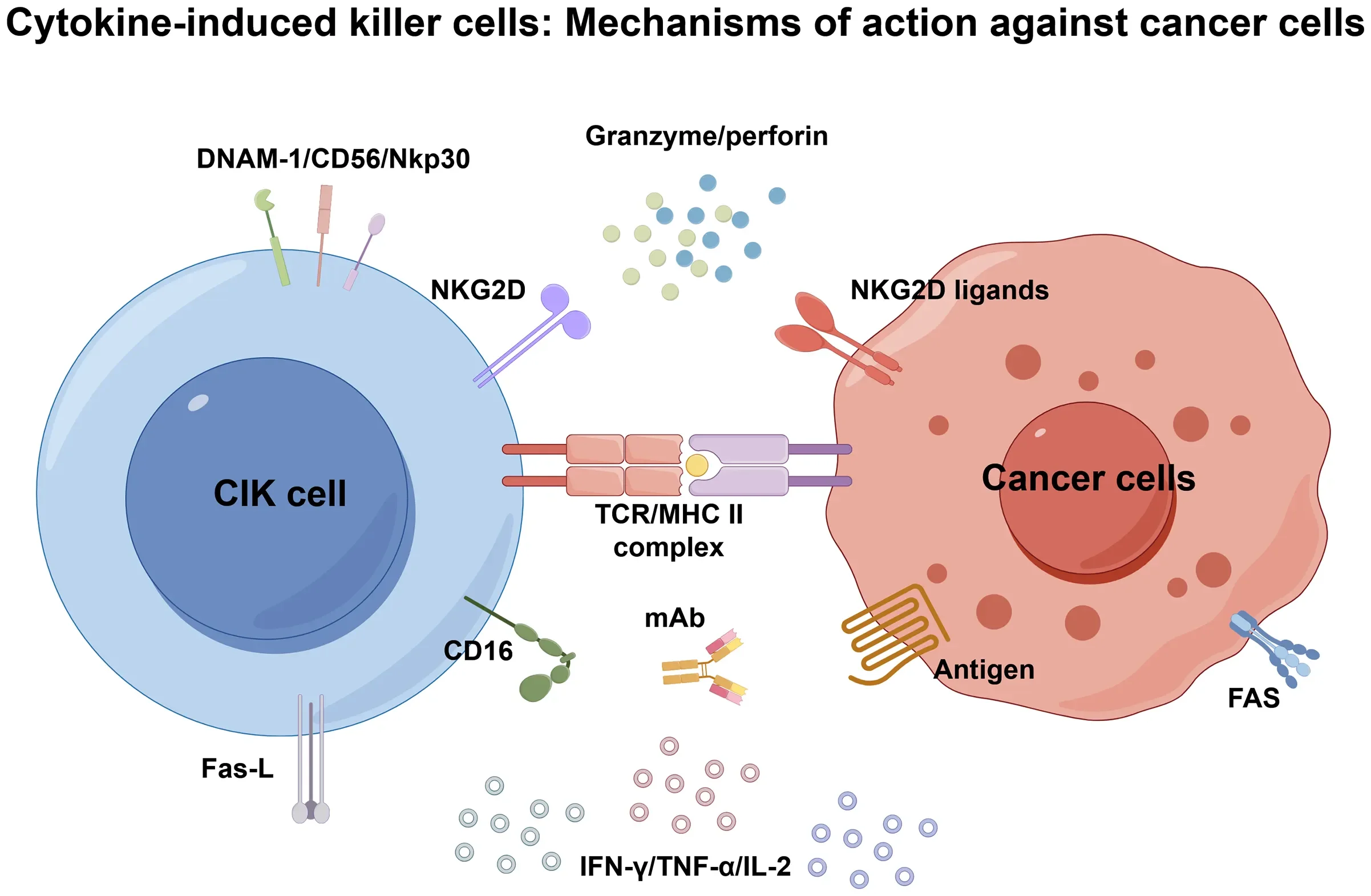
CIK Action Against Cancer Cells. Jiang, Qiu, Ye and Xu. 2025. ttps://www.frontiersin.org/journals/immunology/articles/10.3389/fimmu.2025.1476644/full. Open-access distributed under the terms of the Creative Commons Attribution License.
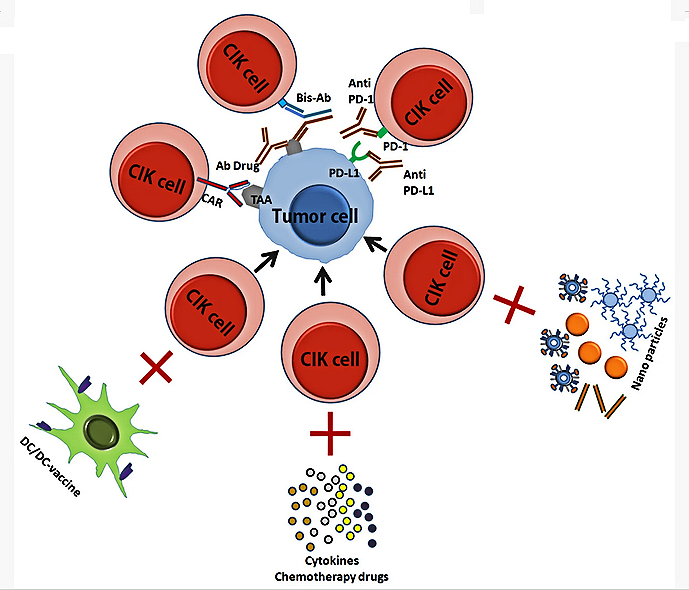
Synergistic Anti-Tumor Killing of DC Combined with CIK. Gao, Mi, Guo, Xu, Xu, Gou and Jin. 2017. https://www.frontiersin.org/journals/immunology/articles/10.3389/fimmu.2017.00774/full. Open-access distributed under the terms of the Creative Commons Attribution License.
DC+CIK
Prostate Cancer
Lung Cancer
Breast Cancer
Colorectal Cancer
Hepatocellular Cancer
Esophageal Cancer
Ovarian Cancer
Renal Cancer
Cervical Cancer
Pancreatic Cancer
Gastric Cancer
Bladder Cancer
Brain Cancer: Glioblastoma multiforme
Sarcomas
Hematological Cancers, including Acute Myelogenous Leukemia and Multiple Myeloma
•For many different types of solid tumors, DC-CIK immunotherapy was associated with improved overall survival (OS) and progression-free survival (PFS) compared to chemotherapy alone.
•DC-CIK immunotherapy demonstrated higher overall response rate (ORR) and disease control rate (DCR) compared to the chemotherapy alone group (non-DC-CIK).
•Adverse events were mild in DC-CIK group with fever being more common than in the control group. However, bone marrow suppression with leukopenia (low white cell counts) and gastrointestinal reactions were less common in the DC-CIK group than in the chemotherapy alone group.
•Conclusion: DC-CIK is more effective in treating solid tumor patients compared to chemotherapy alone and is associated with fewer side effects, especially leukopenia and gastrointestinal reactions compared to the control group.
Bernal SD et al. 2024. Active Immunotherapy: Combining Cellular Therapies with Conventional Treatments to Improve Cancer Outcomes. Handbook of Oncology, Chapter 27, pp 195-206.
Latest News

Case Study: Boosting Employee Vitality in a Remote Workforce
Discover how a fully virtual wellness initiative improved energy levels and reduced absenteeism by 18% within three months.

Research Update: The Link Between Sleep Quality and Immune Strength
New findings underscore the critical role of deep sleep in bolstering your body’s natural defenses—plus tips for achieving it.

Industry Insight: Rising Demand for Preventive Care Services
Healthcare leaders report a significant shift toward proactive health programs, signaling a new era of patient-centered outcomes.
We blend clinical expertise with human-centered coaching to bridge the gap between knowledge and actionable change. Our mission is to make preventive care engaging and accessible, transforming wellness from a daunting task into an inspiring journey.

Comprehensive Wellness Services
Corporate Wellness Workshops
Interactive sessions that equip teams with practical strategies for nutrition, movement, and mental resilience.

Telehealth Nutrition Consultations
One-on-one virtual meetings with licensed professionals to create personalized nutrition roadmaps.

Employee Mental Health Programs
Holistic support combining mindfulness training, stress management tools, and confidential check-ins.

Preventive Health Screenings
On-site and at-home assessments to detect risk factors early and guide targeted interventions.

Let’s Keep In Touch
Ready to elevate your health journey? Reach out today for a complimentary consultation and discover how our tailored programs can work for you.
Our Expertise
Our multidisciplinary team unites seasoned health practitioners, behavior change specialists, and data analysts. Together, we translate the latest research into clear guidance, ensuring every client receives evidence-based and practical solutions.

Follow Us On Social